How to Become a Paid Influencer in India (2026): From 1,000 Followers to Your First Brand Deal
By CloutROI Team
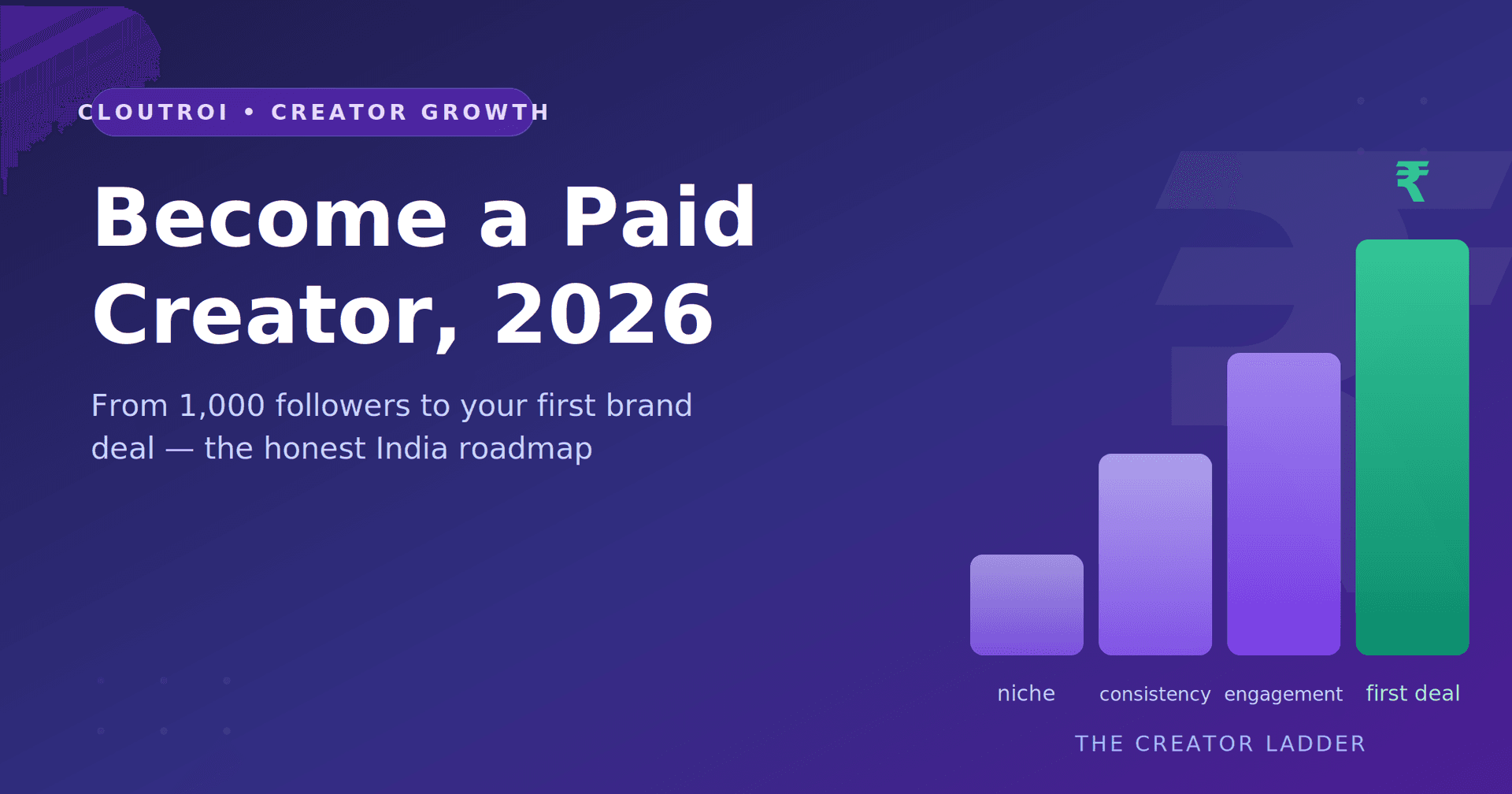
Here's the number that surprises almost everyone starting out: brands in India pay creators with 2,000 followers. Not as charity — as strategy. Nano creators (1K–10K followers) have the highest engagement rates of any tier and cost a fraction of bigger names, which is exactly why FMCG giants and D2C startups build campaigns around them.
So the real question isn't "how do I get 100K followers" — it's "how do I become the kind of small creator brands want to pay." Different question, much faster answer. Here's the honest roadmap for 2026.
Step 1: Own one niche (the smaller, the better)
The classic beginner mistake is becoming a general "lifestyle" account — a bit of food, a bit of travel, a bit of outfits. General accounts grow slowly and monetize worse, because a brand can't tell what your audience cares about.
The creators who get paid early are specific: not "fitness" but home workouts for working women in Pune; not "food" but ₹200 dinner recipes for PG students; not "finance" but first-salary money decisions explained in Hindi. Specificity does three things at once: the algorithm knows who to show you to, your audience knows why to follow you, and a brand knows exactly what buying you gets them. Bonus: niches where audiences make expensive decisions — finance, tech, education, skincare — command 30–50% higher rates at every follower tier.
Two filters for choosing: something you can talk about twice a week for two years without dying of boredom, and something a paying industry sits behind (there are brands with budgets for skincare and personal finance; far fewer for "my daily thoughts").
Step 2: Post like it's a job before anyone pays you like it's one
Every creator who monetized will tell you the same shape of story: months of consistent posting into what felt like a void, then a slow bend upward. Most people quit inside that void — which is, bluntly, why the ones who don't quit get paid.
The 2026 mechanics for India: short video is the game (Reels dominate brand budgets), 3–4 posts a week beats daily-then-burnout, and regional language content is the single biggest under-served opportunity — audience growth in Hindi, Tamil, Telugu, Marathi and Bengali content is outpacing English, while creator supply hasn't caught up. If you're bilingual, that's an unfair advantage; use it.
And post for saves and shares, not likes. "10 phrases for your first salary negotiation" gets saved; "good morning" gets scrolled. Saved content is what platforms push — and what brands screenshot when deciding to hire you.
Step 3: Build the engagement brands actually audit
When a serious brand (or platform) evaluates you, nobody starts with your follower count. They open your last 15–20 posts and look at: do comments sound like real people or emoji walls? Do you reply? Are likes proportionate to followers, or does a 20K account get 90 likes? Any suspicious follower spikes?
That audit is the entire hiring decision, so build for it: reply to every genuine comment in your first year (each reply doubles the comment count and trains the algorithm), ask one question per caption, and never — ever — buy followers. Purchased followers don't just fail the audit; they poison your engagement ratio permanently, making you less hireable at 20K fake than you were at 2K real. As a nano creator, a healthy engagement rate is roughly 4–5% of followers interacting per post; that number is your actual résumé.
Step 4: Make yourself bookable
Plenty of good creators never get paid simply because no brand can figure out how to hire them. Fix the boring things:
- Bio that sells: niche + city + "collabs: DM / email." Brands filter by city constantly (local campaigns are where nano money is); say where you are.
- A one-page media kit: who you are, niche, city, follower count, average views, engagement rate, 3 best posts, contact. A clean Canva PDF is fine. Update monthly.
- A rate card you've thought about. Nano creators in India typically charge ₹1,000–₹12,000 per Reel depending on niche and engagement — we've published the full tier-by-tier numbers in our nano vs micro rates guide and the broader India pricing guide. Start modest, raise after every 3–4 successful deals, and price bundles (Reel + Stories) rather than singles.
- Be on marketplaces. Brands increasingly search platforms rather than cold-DM, because platforms handle discovery, contracts and payment in one place. A complete profile with packages listed is a storefront that works while you sleep.
Step 5: Get business-ready before the first rupee (30 minutes, once)
Three unglamorous things separate creators who keep their money from creators who lose chunks of it:
- Have your PAN ready. Tax on creator payments is deducted at source, and the rate depends entirely on whether your PAN is on file — 0.1% through platforms with PAN, versus 5% without it, and the 5% is usually impossible to claim back. Full explanation in our creator tax guide. Platforms will ask for PAN before your first paid deal; that's the law working in your favour, not bureaucracy.
- Track everything you earn — including freebies. Barter deals count as income at market value, and your running total matters for GST later (registration only becomes mandatory past ₹20 lakh a year — the rules are friendlier than WhatsApp-group rumours suggest, see our GST guide for creators).
- Never work on a promise. The most common nano-creator horror story is delivering a Reel and chasing payment for two months. Get deliverables in writing, and prefer arrangements where the money is committed before you create — escrow-style platforms hold the brand's payment upfront and release it when you deliver, which removes the single biggest risk of going pro.
Step 6: The first-deal playbook
Your first offers will likely be barter (product-for-post). Take one or two if the product genuinely fits your niche — they're portfolio pieces — then move to cash or product-plus-cash; "exposure" doesn't pay rent, and a creator who always works free trains brands to never pay them.
When the first paid deal lands: over-deliver slightly (one extra Story), hit the deadline, follow disclosure rules (#ad — mandatory under ASCI guidelines, and professional creators treat it as normal), and afterwards ask two things — a testimonial, and "what's coming next quarter?" Repeat clients are how nano incomes stabilize; every future deal with the same brand costs you zero acquisition effort.
Quick answers
How many followers do I need to become a paid influencer in India? Around 1,000 engaged followers is the realistic floor — that's the nano tier, and it's actively hired. Engagement quality matters far more than crossing any particular count.
How much money do influencers make in India? Nano creators typically earn ₹1,000–₹12,000 per Reel; micro creators (10K–100K) ₹8,000–₹80,000. Income stabilizes through repeat brand relationships, not one-off virality — full breakdown in our rates guide.
Do I need to register a company or GST to start? No. You can earn as an individual; GST registration only becomes mandatory past ₹20 lakh annual turnover. Keep your PAN handy and track income from day one.
How long does it take? Creators posting consistently in a defined niche typically see their first inbound brand interest somewhere in months 4–12. The variable you control is whether you're still posting in month 9.
CloutROI is an escrow-backed marketplace where Indian creators list their packages, get discovered by brands, and get paid on delivery — with the brand's money secured before you create. Setting up a profile is free.
Figures are indicative 2026 market ranges; individual results depend on niche, engagement and consistency.