
Micro Influencer Marketing in India (2026): The FMCG Playbook Small Brands Can Copy on ₹50,000
By CloutROI Team
When Nykaa launched its clay mask range, it didn't book a film star or buy TV spots. It briefed dozens of micro creators — skincare enthusiasts with a few tens of thousands of followers each — gave them creative freedom, and let tutorials, honest reviews and masking selfies do the work. When Korean razor brand Dorco entered India with zero name recognition, it didn't hire one celebrity; it hired over a hundred creators across tiers and reached ten-million-plus people almost overnight. Hindustan Unilever runs regional-language nano campaigns to launch products in towns where a Mumbai celebrity means less than the local food blogger.
The biggest marketing budgets in the country are being deliberately split into smaller and smaller pieces. That's not a cost-cutting story — it's a performance story. And it's very good news if you run a small brand, because the strategy the giants converged on is the one you can actually afford.
The math that changed everyone's mind
For years, influencer marketing was bought like TV: pay for maximum reach, hope some of it converts. Then brands started measuring engagement instead of followers, and the numbers flipped the logic upside down.
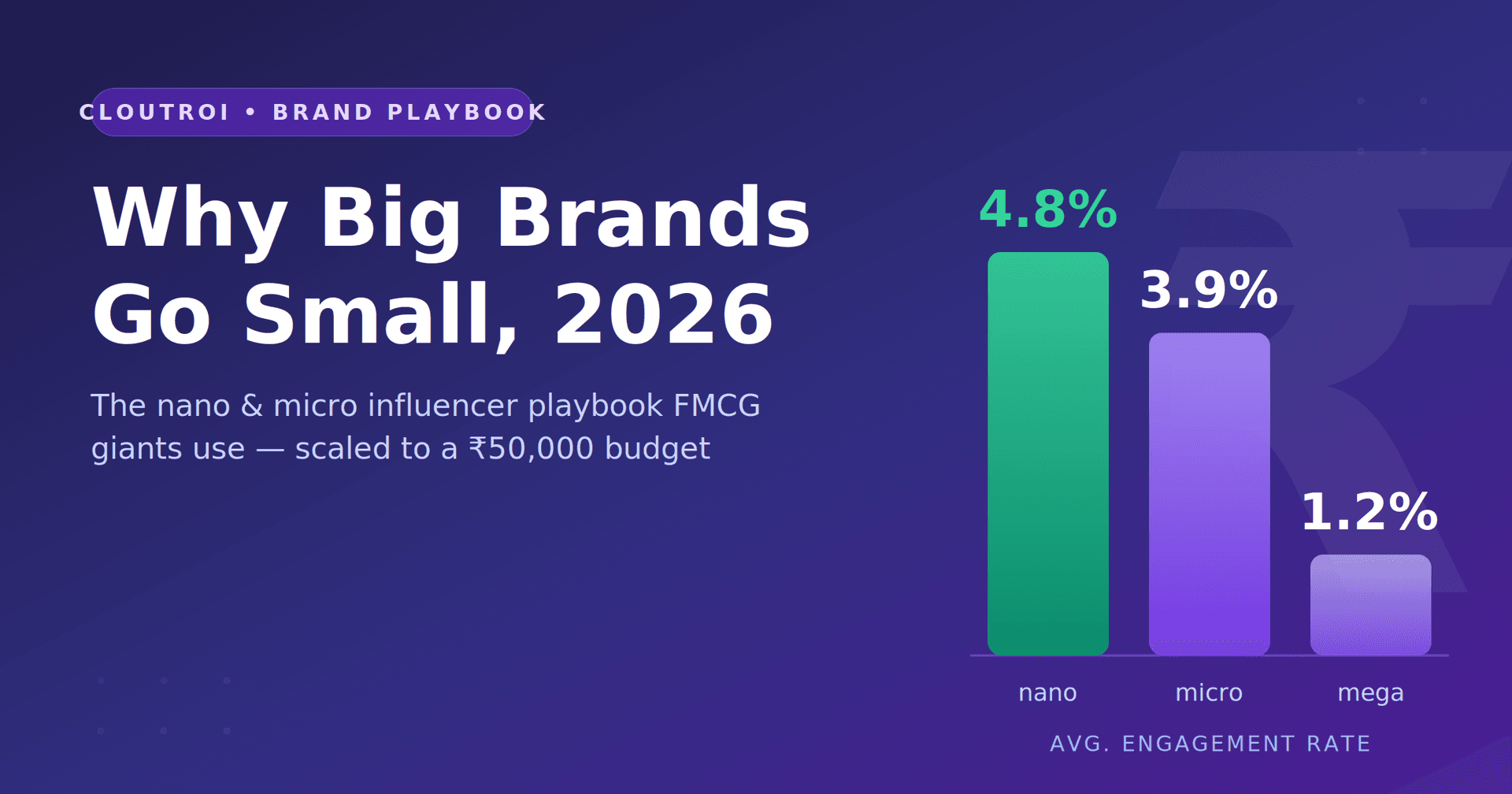
Industry benchmarks consistently show the same pattern: the smaller the creator, the harder their audience listens. Nano creators (under 10K followers) average engagement around 4–5% of their audience per post. Micro creators (10K–100K) land around 3–4%. Cross half a million followers and engagement typically drops below 2%; past a million, it's often nearer 1%.
How much does micro influencer marketing cost in India?
Now add pricing. In India, a nano creator's Instagram Reel typically costs ₹1,000–₹12,000 and a micro creator's ₹8,000–₹80,000 depending on niche and engagement — while macro and celebrity tiers run into lakhs per post. Put the two curves together and the conclusion writes itself: per rupee spent, small creators deliver several times the genuine attention of big ones. Agencies report meaningfully lower acquisition costs on hyper-local micro campaigns than on celebrity-led ones, and stronger sales lift in non-metro markets.
There's a second, less-quoted advantage: risk spreading. One celebrity post that flops is your whole budget gone. Ten small creators means ten independent bets — a couple will underperform, a couple will overperform, and you learn which niches and formats work for your product before you scale anything.
What the big brands actually do (four patterns worth stealing)
1. Swarm launches. Dorco's India entry used 105 creators at once — grooming reviewers, lifestyle vloggers, skit makers — all posting in the same window. The point of a swarm isn't any single post; it's that a person sees the product three times in one week from three unrelated people they follow. Familiarity reads as popularity. You don't need 105 creators for this; even 8–10 posting in the same fortnight creates the "suddenly everywhere" effect inside a specific niche or city.
2. Creative freedom over scripts. The Nykaa campaign worked because the content didn't feel copy-pasted — creators made tutorials, ASMR clips and funny reels in their own voice. Brands that mail out a rigid script get content that looks like ads, and audiences scroll past ads. Give creators the three things that must be true (product benefit, how to buy, disclosure) and let them own everything else.
3. Regional and hyper-local targeting. The growth in Indian consumption is coming from tier-2/3 towns and regional-language audiences — exactly where a national celebrity's pull is weakest and a local creator's trust is strongest. HUL and other FMCG majors deliberately pick creators who belong to the community they're selling into: same language, same food habits, same price sensitivity. For a small brand this is even more natural — if you sell in three cities, work with creators from those three cities.
4. Emotion and occasion over specs. Levista, a South Indian filter-coffee brand, built a campaign around creators sharing personal coffee memories — morning rituals, brewing for family — and pulled millions of views with heavy comment engagement, because people tagged the friends the stories reminded them of. FMCG purchases are habitual and emotional; the winning briefs attach the product to a moment, not a feature list.
The ₹50,000 playbook for a small brand
Here's the same strategy scaled to an SMB budget. Assume ₹50,000 total; adjust proportionally.
Step 1 — Pick one niche and one geography (not "everyone"). ₹50k spread nationally vanishes. ₹50k concentrated on, say, fitness-focused audiences in Pune, or home-cooking audiences in Hyderabad, is a visible swarm. Depth beats width at this budget.
Step 2 — Recruit 8–12 nano/micro creators, ₹2,000–₹6,000 each. Selection rules the giants use, which cost you nothing to copy: check the last 15–20 posts for consistent comments that sound like real people (not emoji walls); be suspicious of sudden follower spikes; and prefer a 6,000-follower creator in exactly your niche over a 60,000-follower generalist. Niche authority converts; raw reach doesn't.
Step 3 — Brief for a moment, not a script. One page: what the product does, the one claim they must get right, where to buy, mandatory #ad/#sponsored disclosure (ASCI guidelines require it — non-negotiable), and the campaign window. Then let them create. Ask for a Reel plus 2–3 Stories rather than a static post — short video is where FMCG engagement lives, and bundles are routinely discounted 20–35% versus buying deliverables one by one.
Step 4 — Post in a tight window. All creators live within the same 10–14 days. The swarm effect only happens when the posts overlap.
Step 5 — Measure like the big brands do. Give each creator a unique coupon code or link. After the window, rank creators by saves, shares, comments-that-ask-where-to-buy, and code redemptions — not likes. Re-book the top three for next month. This is the real secret: the giants aren't running campaigns, they're running an always-on roster that they prune and re-book based on data. Your second ₹50k works twice as hard as your first.
One caution on payments: at 8–12 simultaneous collaborations, the operational risk isn't creative — it's transactional. Advance payments to creators who ghost, or creators delivering and then chasing you for weeks, sours the roster you're trying to build. Agree written deliverables and use an escrow arrangement where money is committed up front but released on delivery — it protects both sides and is exactly why small brands increasingly run these campaigns through marketplaces rather than DMs and bank transfers.
The mistakes that burn small budgets
- Buying followers instead of engagement. The single most expensive mistake. A creator's price should track their engagement rate and niche fit, not their follower count.
- One big creator instead of many small ones. At ₹50k you can afford one decent mid-tier post — a single point of failure — or a ten-creator swarm with built-in learning. Take the swarm.
- Skipping disclosure. ASCI requires clear labels on material connections. Undisclosed posts risk takedowns and erode exactly the trust you're paying for.
- No usage rights conversation. If you want to reuse a creator's video in your own ads later, agree it up front — usage rights typically add 30–150% but negotiated at booking time cost far less than after the video performs.
- Judging in one campaign. FMCG influence works by repetition. Budget for two or three cycles with a pruned, improving roster before you judge the channel.
CloutROI is an escrow-backed influencer marketplace built for Indian SMBs — find verified nano and micro creators by niche and city, fund deals into escrow, and pay only on delivery. No retainers, no agency minimums.
Campaign examples referenced are drawn from publicly reported industry coverage; figures are indicative market ranges as of 2026 and vary by niche, format and negotiation.