What Is an Influencer Marketplace? (And How It Works in India)
By CloutROI Team
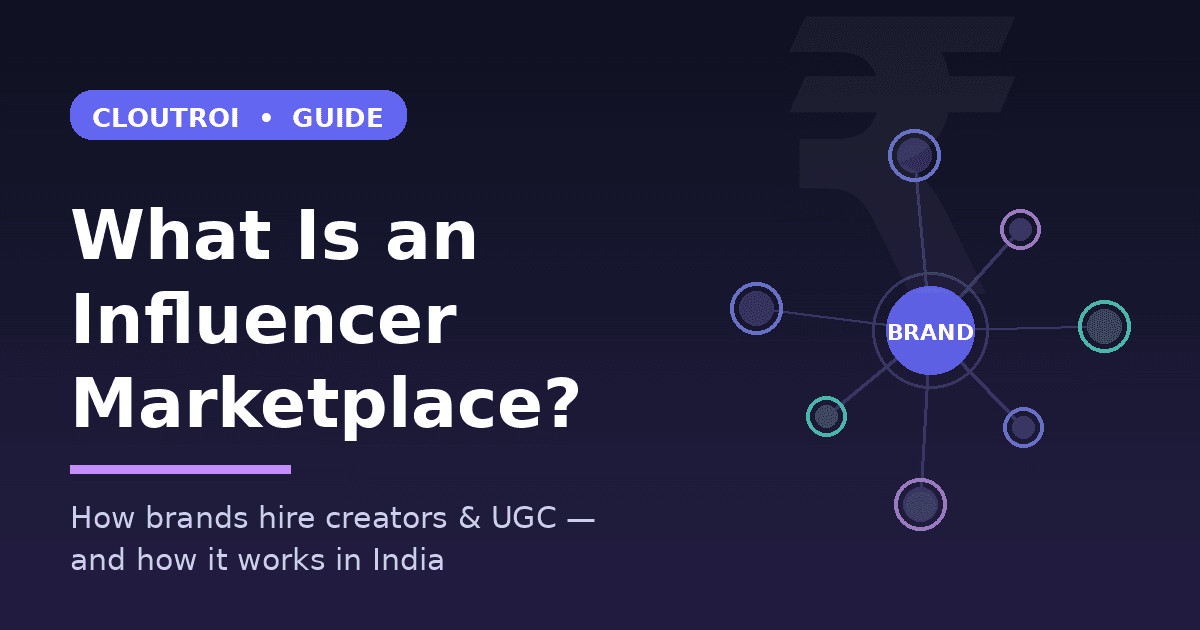
An influencer marketplace is an online platform where brands find, hire, and pay social media creators for promotional content — sponsored posts, reels, UGC videos, and product reviews — all in one place. Instead of DMing creators one by one or paying agency retainers, brands browse creator profiles with real rates, book directly, and pay through the platform.
That's the short answer. Here's how these platforms actually work, what they cost, and how to decide whether one fits your brand.
How does an influencer marketplace work?
Most marketplaces follow the same basic flow on both sides:
For brands: you search or browse creators by niche (fashion, fitness, food, tech), platform (Instagram, YouTube), city, and budget. Each creator profile shows their content samples, audience details, and — on transparent platforms — fixed package prices. You pick a package, brief the creator, and pay. The money is typically held in escrow: the creator only gets paid after you've approved the delivered content.
For creators: you build a profile, list your services as packages ("1 Instagram Reel — ₹8,000", "UGC video for ads — ₹5,000"), and receive booking requests. The platform handles contracts, payments, and disputes, so you're not chasing invoices over WhatsApp.
The marketplace sits in the middle, taking a commission on transactions — which is how most of them make money.
Marketplace vs agency: what's the difference?
This is the decision most brands are actually weighing, so here's the honest comparison:
An agency manages your campaign end-to-end: strategy, creator selection, negotiation, content review, reporting. You pay for that service — typically a retainer or a significant margin on top of creator fees. Good agencies earn it, especially for large multi-creator campaigns.
A marketplace gives you the tools to do it yourself: discovery, booking, contracts, and payments are handled by the platform, but you choose the creators and write the briefs. It costs meaningfully less, moves faster, and gives you a direct relationship with the creator — at the price of doing the campaign thinking yourself.
A rough rule of thumb: if you're a startup or D2C brand running your first campaigns with a few creators, a marketplace is usually the better starting point. If you're deploying large budgets across dozens of creators every month and don't have in-house bandwidth, an agency (or a hybrid) starts to make sense.
What does it cost to hire creators through a marketplace?
Two costs matter: the creator's fee and the platform's cut.
Creator fees in India vary enormously by follower count, engagement, niche, and deliverable. As a general shape of the market: nano creators (under ~10k followers) often charge in the low thousands of rupees per reel; micro creators (10k–100k) typically range from several thousand to tens of thousands; and rates climb steeply from there. UGC content — where the brand runs the video as an ad rather than the creator posting it — is usually priced per video rather than by follower count, since the creator's audience isn't what's being bought.
For concrete numbers, see our detailed rate guide for India.
Platform fees differ by marketplace — some charge brands, some charge creators, some both. Look for platforms that publish their fees openly; opaque pricing usually means margin is being taken somewhere you can't see. You can see CloutROI's fees on our pricing page. For how the main Indian options compare, see our comparison of the best influencer marketing platforms in India.
What's the difference between influencer content and UGC?
The distinction trips up a lot of first-time buyers:
Influencer marketing buys access to the creator's audience — they post about your brand to their followers. You're paying for reach and trust.
UGC (user-generated content) buys the content itself — a creator makes authentic-style videos that you run in your own ads and social channels. Their follower count barely matters; their ability to make convincing, native-looking content is everything. UGC is usually cheaper and has become the default way D2C brands feed Meta and Google ad creative.
Many marketplaces (including CloutROI, where you can hire UGC creators directly) handle both, and many creators offer both as separate packages. For a full breakdown of when to use which, see UGC vs influencer marketing.
When should a brand use an influencer marketplace?
A marketplace fits best when at least a couple of these are true: you're running your first influencer or UGC campaigns and want to learn by doing; your budget is startup-sized and agency retainers don't pencil; you want content or promotion live within days, not weeks of back-and-forth; or you want direct creator relationships you can rebook without a middleman.
It fits less well when you need heavyweight campaign strategy, celebrity-tier talent (usually agency-brokered), or someone else to own the whole process.
When should a creator join one?
If you're a creator, a marketplace solves the three problems that eat most of your time: getting discovered by brands you'd never reach by cold pitching, getting paid reliably (escrow means no ghosted invoices), and looking professional with a bookable profile instead of a rate card PDF. This matters most for nano and micro creators who don't have inbound brand deals yet — which is exactly who Indian brands are increasingly looking to work with.
If that's you, here's how CloutROI works for creators — and if you have no audience yet, UGC is the path that doesn't need one.
The bottom line
An influencer marketplace is the self-serve layer of the creator economy: discovery, booking, contracts, and escrow-protected payment in one platform, at a fraction of agency cost. For most Indian startups and D2C brands, it's the lowest-risk way to start working with creators — and for most emerging creators, it's the fastest route to paid brand work.
Frequently asked questions
Is an influencer marketplace free to use? Signing up is free on most platforms, including CloutROI, where a free brand account lets you browse creators. Fees apply on transactions — check each platform's pricing page for how commissions are split between brands and creators.
Do marketplaces verify creators? It varies, so check how. Ask whether each number comes from the social platform itself or was typed in by the creator. On CloutROI, every number on a profile is labelled by how it was verified.
Can I hire creators in regional languages? Yes — this is one of the strongest reasons to use an India-focused marketplace, where Hindi, Tamil, Telugu, Marathi and other regional-language creators are searchable directly.